Presales Management for Sales Engineering and Solutions Consulting Teams
Without the Manual Overhead
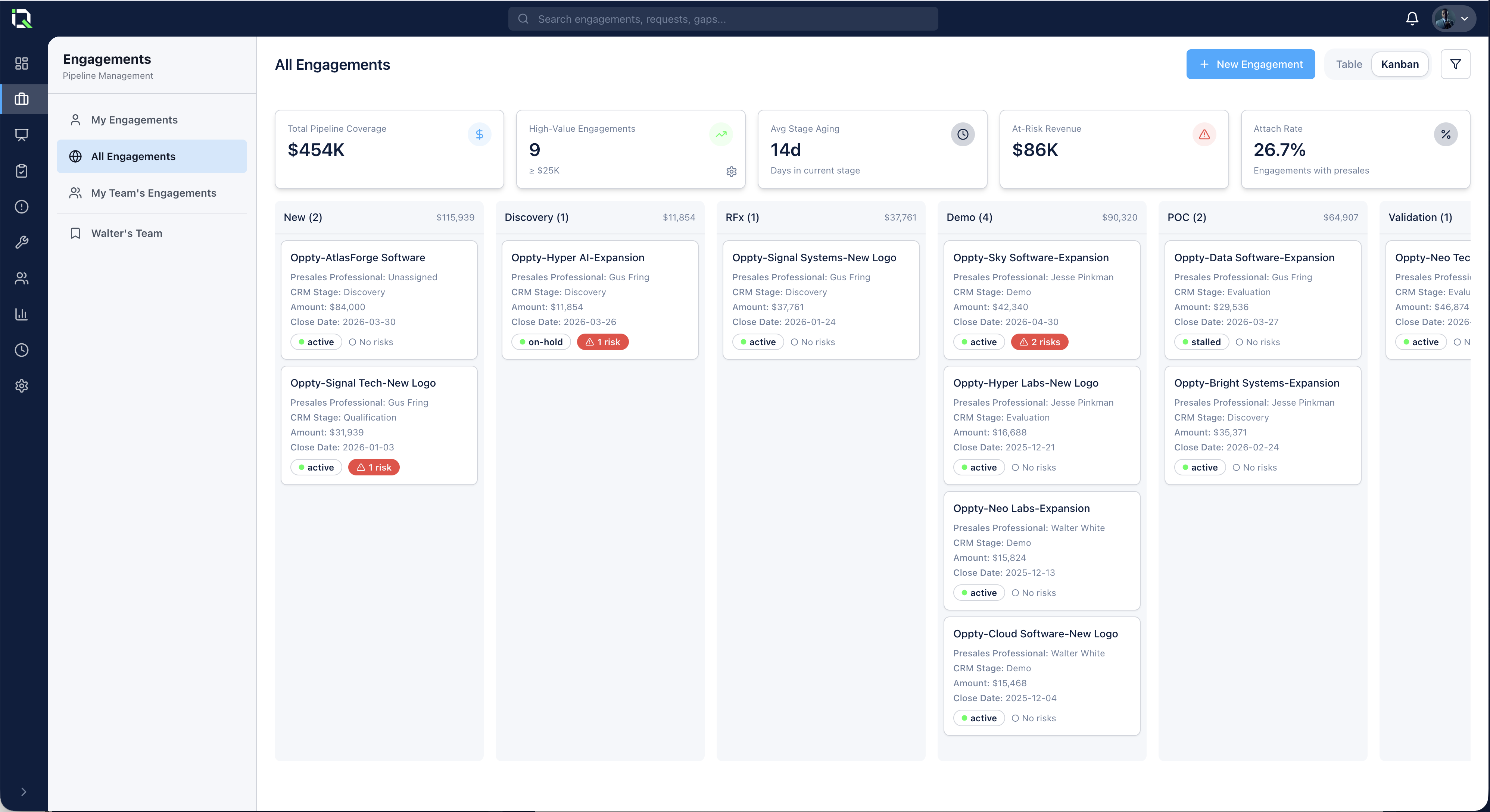
PresalesIQ gives sales engineering, solutions engineering, and solutions consulting teams AI-native infrastructure for presales operations. Engagement management happens automatically — capturing activity, structuring workflows, and generating real-time operational intelligence without CRM workarounds or manual logging.
Not ready yet? Get presales insights delivered to your inbox. Subscribe to the newsletter →
Zero manual entry
AI generates engagement structure
Intervene earlier
Deal risk visible in real-time
Execute faster
Make decisions, not chase data
You're accountable for outcomes you can't see coming
Technical win rates. Forecast accuracy. Team utilization. Whether you lead a sales engineering organization, a solutions consulting team, or a broader presales function, you own these metrics — but the signal you need is often scattered, stale, or missing.
Manual entry cannot keep pace with modern deal velocity. By the time presales data is updated, the window for intervention has already closed. AI-native presales infrastructure gives sales engineers and solutions consultants the visibility to act before outcomes are decided for them.
PresalesIQ exists because we lived this. We built the AI-native infrastructure we needed to lead—not chase.
If this sounds familiar, you're not alone.
- How much effort is going into deals that will never close?
- Which engagements are at risk right now—and why don't I know?
- Am I understaffed, or just operating blind?
- Why am I still chasing updates instead of acting on them?
These aren't edge cases. They're the daily reality of leading presales without AI-native infrastructure.
Presales operations run on tools that weren't built for this
Presales operations often run on tools that were never designed for technical sales execution. CRMs were built for account executives — not for sales engineers, solutions consultants, or solutions architects managing complex evaluations, demos, and proofs of concept.
Manual trackers can't keep pace with deal velocity. The result is leaders making critical decisions based on incomplete or outdated information — and discovering risk only after it's too late to act.
CRMs
- Designed for sales reps—presales workflows don't fit
- No native structure for engagements, POCs, or product gaps
- Data is only as current as the last manual entry
- Presales context has no owner, so it disappears between handoffs
Manual Trackers
- Stale the moment you close the spreadsheet
- No single source of truth—just competing versions
- Zero intelligence—rows and columns can't surface risk
- Updates lag reality by days, so leaders act on outdated information
"We spent years forcing tools to do jobs they were never designed for. The day we embedded AI into presales, sales engineering, and solutions consulting workflows, everything changed.
Presales execution without the lag
Without AI-native presales infrastructure, sales engineering and solutions consulting teams operate with lagging data and incomplete context. This isn't just a tooling problem — it's a structural disadvantage.
Structure that exists instantly
AI eliminates the gap between activity and data. Engagements, context, and risk signals are structured the moment work happens — not entered later. Sales engineers and solutions consultants stay focused on customers, not data entry.
Risk you see before it spreads
Embedded intelligence surfaces signals that matter while intervention is still possible. Leaders across presales, sales engineering, and solutions consulting act before deals stall.
Decisions made with current data
When structure is always current, forecasting and resource allocation stop being guesswork. Capacity planning reflects real technical workload — not assumptions.